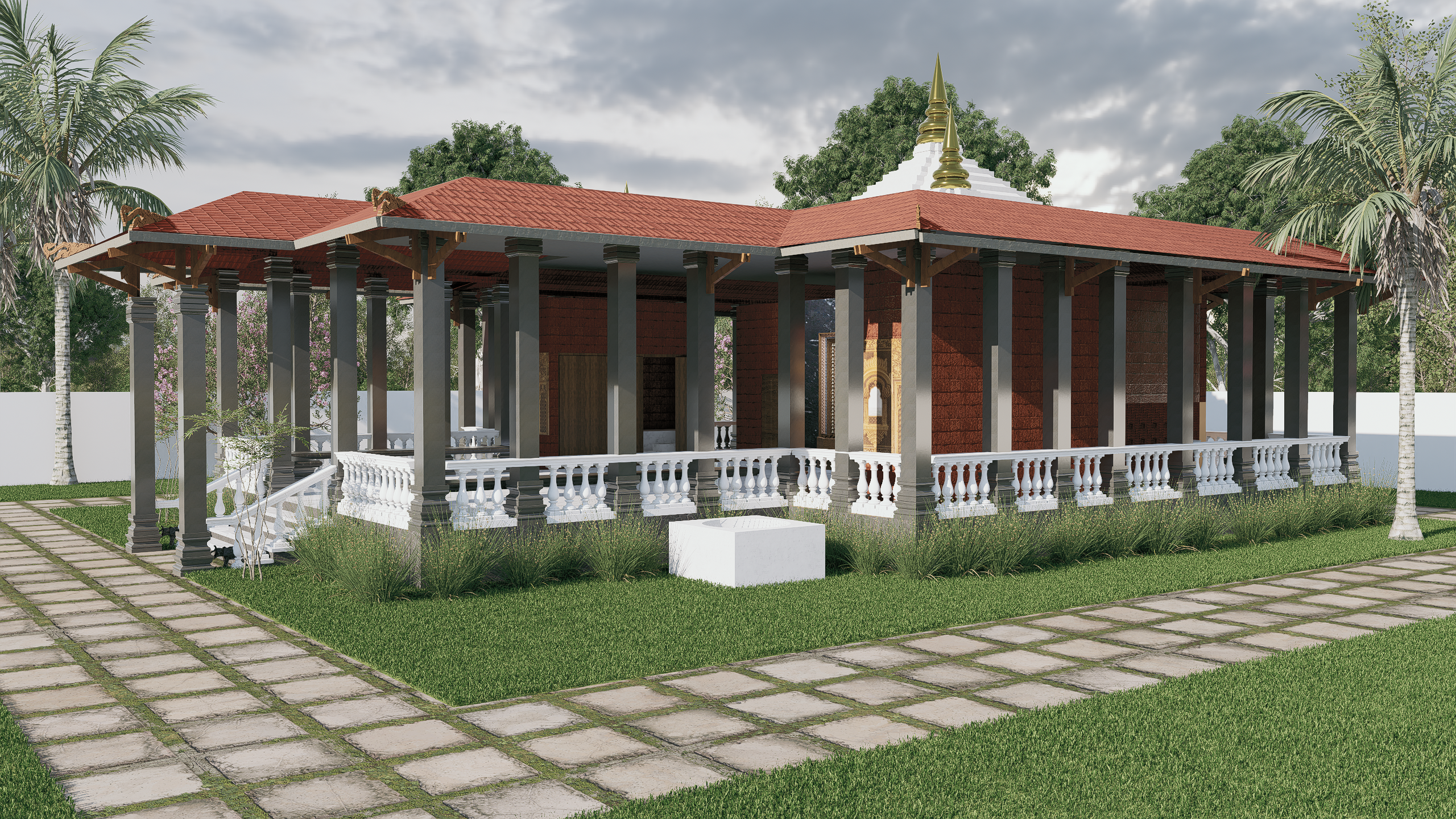
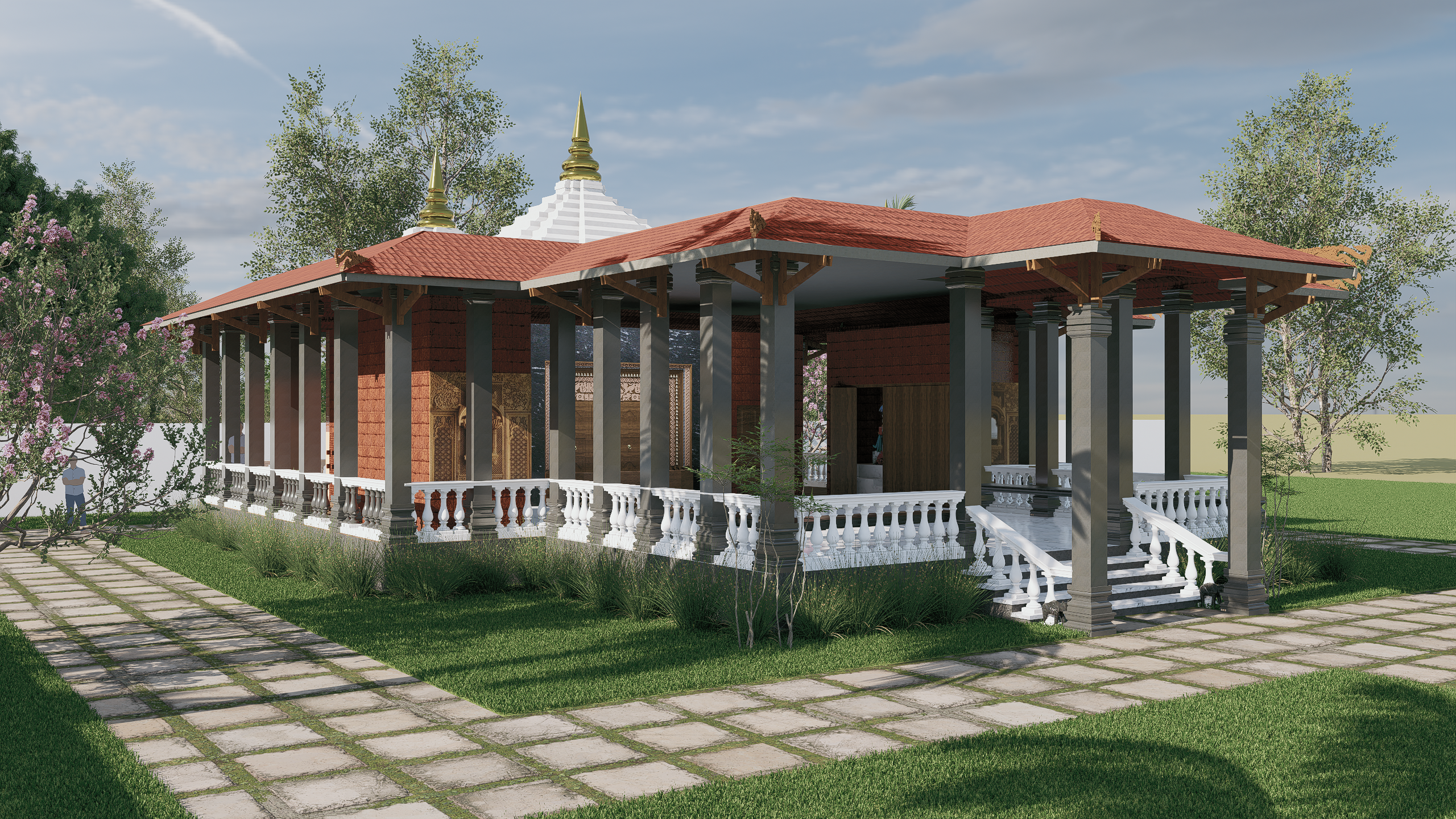
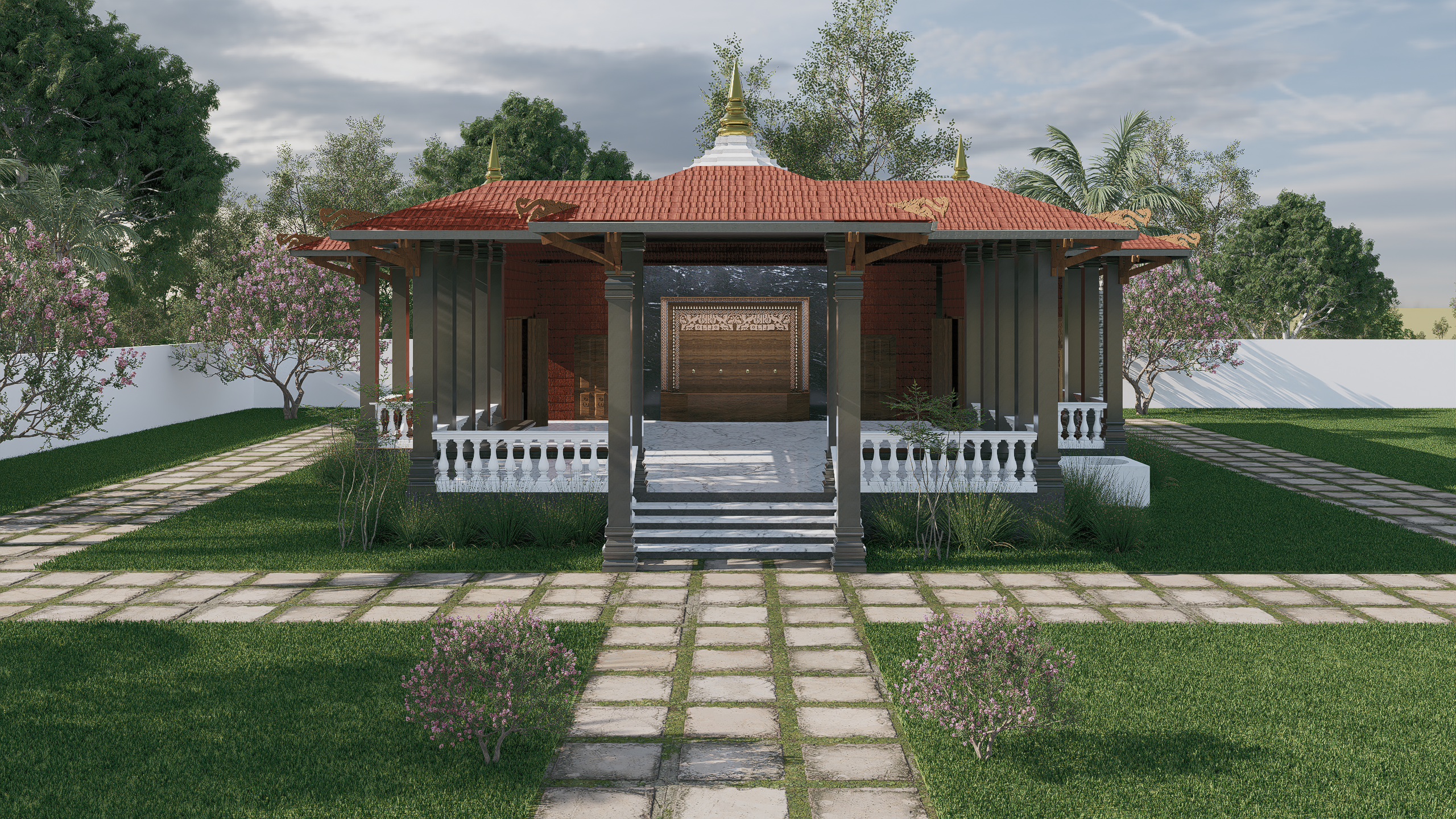
The Sri Radhagiridhari Temple, located in Puzhal, is a striking example of sustainable and culturally rich architecture. Spanning 4200 sq.ft, the temple was designed by the Sri Radha Giridhari Seva Trust to blend traditional Indian temple design with modern, eco-conscious solutions. The project emphasizes the use of locally sourced materials and passive design principles to reduce environmental impact and energy consumption. The temple’s construction incorporates stone columns, GRC balustrades, and a terracotta-tiled roof, reflecting regional wisdom while ensuring durability, aesthetic richness, and climate responsiveness. By combining sustainable practices with time-honored craftsmanship, this temple honors cultural heritage while prioritizing environmental responsibility, making it a beacon of eco-conscious spiritual architecture.
Features & Amenities
Stone Columns – Structural Strength & Thermal Mass
The Sri Radhagiridhari Temple, located in Puzhal, spans an area of 4200 sq.ft and is a thoughtful blend of sustainability, heritage, and local craftsmanship. Commissioned by the Sri Radha Giridhari Seva Trust, this temple design incorporates sustainable vernacular principles, utilizing locally sourced materials to ensure structural stability, energy efficiency, and minimal environmental impact. The temple’s design harmonizes traditional Indian temple architecture with eco-conscious solutions, including the use of stone, GRC balustrades, and terracotta roofing, contributing to passive cooling, durability, and aesthetic appeal.
Key Features:
Stone Columns – Structural Strength & Thermal Mass:
Locally sourced natural stone provides both structural stability and aesthetic appeal, regulating indoor temperatures by absorbing and releasing heat slowly, ideal for tropical climates. The intricate carvings preserve traditional craftsmanship while minimizing reliance on modern materials.
GRC Balustrades – Lightweight & Durable:
Glass Fiber Reinforced Concrete (GRC) offers durability, flexibility, and a reduced weight compared to traditional concrete, allowing for intricate heritage-inspired designs with minimal maintenance. It is resistant to weathering, contributing to the longevity of the temple.
Terracotta Roof – Climatic Responsiveness & Eco-friendliness:
The terracotta-tiled roof provides natural insulation, keeping the temple cooler in summer and warmer in winter. Being locally available, biodegradable, and low-energy, terracotta is an eco-friendly material. The roof’s sloped design efficiently drains rainwater, protecting the structure from water damage.
Sustainability & Vernacular Integration – Eco-Conscious Design:
The use of stone, GRC, and terracotta minimizes reliance on artificial cooling and lighting, enhancing energy efficiency. Locally sourced materials reduce transportation emissions, and the design preserves traditional construction methods, ensuring cultural continuity while embracing modern durability.